
Over the summer, Smart Mobility Embassy’s Why the Netherlands? series explored five themes that help explain the Dutch approach to smart mobility. While each topic addresses a different aspect of the mobility system, together they reveal how the Netherlands combines technology, data and collaboration to create practical mobility solutions.
Geplaatst op 10 september 2026
One connected mobility story
Throughout the series, we highlighted five topics for which the Netherlands is internationally recognised:
- Traffic Management
- Mobility Data
- Public-Private Collaboration
- Digital Traffic Information
- Mobility Hubs
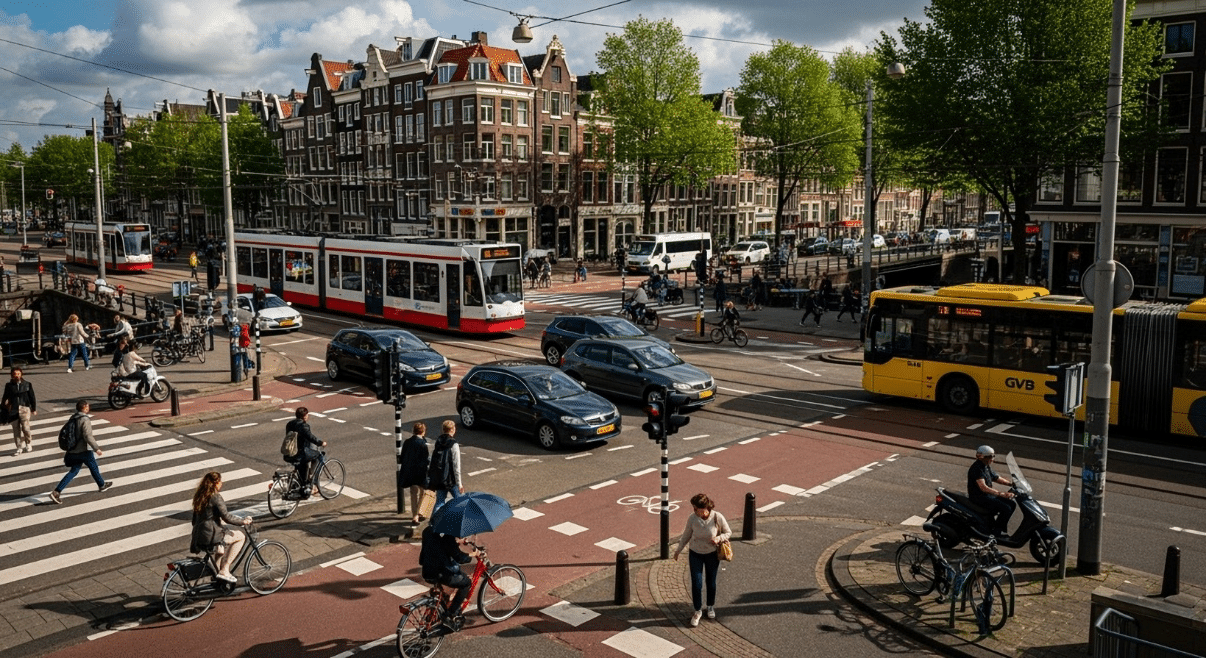
At first glance, these themes may appear unrelated. In reality, they form different parts of the same mobility ecosystem. The Dutch approach is not defined by a single innovation or technology, but by the combination of traffic management, mobility data, collaboration, digital infrastructure and societal application.
From infrastructure to information
For decades, the Netherlands has focused on making the most efficient use of existing infrastructure. Traffic management helps keep people and goods moving, while mobility data increasingly serves as the digital foundation for smart mobility services.
Reliable data enables traffic management systems, traveller information and innovative mobility solutions. As mobility becomes more digital, the quality, availability and accessibility of data become increasingly important.
Collaboration as a driving force
A defining characteristic of the Dutch mobility ecosystem is the close cooperation between public authorities, businesses, knowledge institutions and civil society organisations.
This collaborative approach supports innovation, enables knowledge sharing and helps bring new mobility solutions from concept to real-world implementation. It is one of the reasons why the Netherlands is often viewed internationally as a valuable testing ground for mobility innovation.
Digital services and mobility hubs
The role of traffic information is increasingly shifting from roadside infrastructure to digital platforms and navigation services. Real-time information helps travellers make better-informed decisions and supports more efficient use of existing networks.
At the same time, mobility hubs demonstrate how these developments come together in practice. By connecting transport modes, people, services and destinations, mobility hubs contribute to accessibility, liveability and inclusion.
Looking ahead
What connects all five themes is their interdependence. Traffic management relies on data. Data enables digital traffic information. Collaboration drives innovation. Mobility hubs bring these elements together in everyday mobility.
Together, they contribute to the same ambition: a mobility system that is smarter, safer, more sustainable and more accessible.
Following the summer break, Smart Mobility Embassy will continue exploring these themes through practical examples, case studies and insights from the Dutch mobility ecosystem.